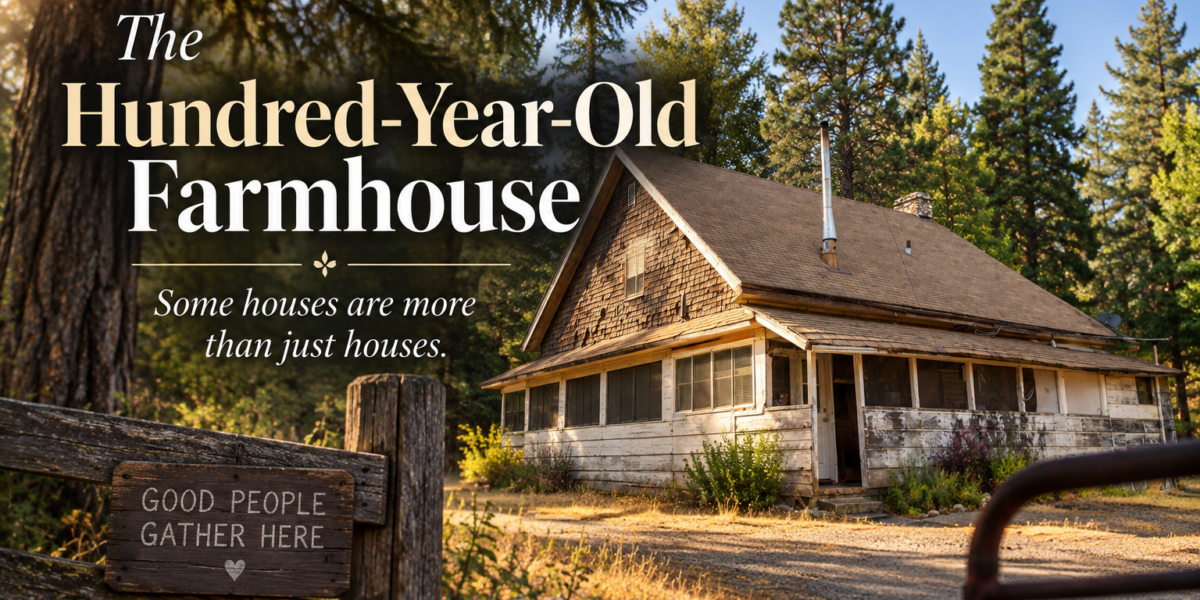
Not long ago, I appraised a house that was a hundred years old. It sat on a large piece of land in the foothills and had accumulated a century of decisions. There was an enclosed sleeping porch from an era gone by, electrical wiring from several different eras, a primary bathroom addition that appeared to be reconsidering its attachment to the rest of the house and a floor plan designed long before anyone worried much about whether a primary bedroom should have its own bathroom.
It was fascinating. But none of those things were really why I was there. I was there because a family was trying to figure out what to do about Great Auntie.
I’m going to call her Great Auntie, and I’ve changed and combined some of the details of this story to protect the family. The situation itself, though, is very real and one appraisers encounter in different forms all the time.
Great Auntie was quite elderly, she’d outlived her children, and wanted to remain in her home. Not particularly complicated from her perspective. This was where she had lived for decades, where she had raised her family and where generations of extended family had gathered. She had been the light and heart of the family for so long that the house had almost become an extension of her. Everybody knew Great Auntie’s house.
Now another generation of family was helping care for her and trying to make decisions nobody particularly wanted to make. They didn’t all agree.
Some wanted to do everything reasonably possible to allow her to remain in the home she loved. Others believed she needed more care than the house or family could safely provide and thought moving her to a care facility was the better choice. The property also represented a substantial financial asset, and there were competing interests in what would happen if it were sold.
Those positions can sound ugly if we reduce them to one side wanted Great Auntie to stay and the other wanted the money. Families are rarely that simple. Someone can love an elderly relative and still believe she shouldn’t be living alone. Someone can worry about money and also worry about her safety. Someone else can look at the same situation and believe that taking an elderly woman out of the only home she wants to live in would cause more harm than the problems everyone is trying to solve.
I wasn’t there to decide which of them was right. I was there to appraise the house, to give the family an independent valuation from which they could work. And the house, the house had plenty to say for itself.
A Hundred Years Is a Long Time to Own a Level
Old houses don’t always reveal themselves politely. Sometimes they reveal their particularities immediately. They signal, “You have your work cut out for you, appraiser. This one had composition roofing shingle acting as siding material and it was curling, peeling, and detaching in all manner of ways. I knew immediately I’d have to photograph and document extensively as I worked to appraise this home.
A door that looks perfectly normal from one side may require a little persuasion from the other. Floors wander. Walls don’t always meet where you expect them to. You can walk into an addition and immediately recognize that the person who built the original house and the person who added that room were solving very different problems in very different decades.
This particular house predated the local building department as we know it today. It was built in an era before many of the minimum residential standards we now take for granted existed, and then generations of owners adapted it as life changed.
A porch became enclosed living space. Electrical systems were added and upgraded. Rooms changed purposes. An addition expanded the house but didn’t necessarily improve how people moved through it. Bedrooms and bathrooms reflected expectations from another time.
None of this is particularly unusual for an old foothill home. In fact, it’s part of what makes observing one interesting. You’re not really looking at a house built once. You’re looking at a structure that has been edited for a century.
Some edits worked better than others. The problem for an appraiser is that the market doesn’t give extra credit simply because a house has survived a long time.
Old Isn’t the Same Thing as Bad
This is an important distinction. A hundred-year-old house isn’t automatically inferior to a twenty-year-old house. I’ve been in older homes that have been carefully maintained and thoughtfully updated for generations. I’ve also been in relatively young homes that have experienced enough neglect to make their chronological age nearly meaningless.
Appraisers therefore look at more than the year printed in the county record. We consider condition, quality, maintenance, renovations, physical deterioration and how the house functions for the people who are likely to buy it. We sometimes talk about effective age, which is essentially a way of recognizing that two houses built in the same year may have aged very differently.
But there is another kind of aging that has nothing to do with whether somebody maintained the roof. The way we live changes.
A house designed a century ago wasn’t expected to accommodate the way a modern family uses a home. Bedroom and bathroom relationships changed. Kitchens changed. Electrical demands changed dramatically. Storage expectations changed. Heating and cooling changed. The number and size of vehicles changed. Even our expectations about how one room should flow into another changed.
A house can therefore be standing exactly as intended and still have characteristics today’s buyers find less useful. Appraisers call some of those issues functional obsolescence.
Great Auntie called them home.
Ten Acres Must Be Worth a Fortune, Right?
The land added another wrinkle. People understandably assume more land means more value. If a house on one acre is worth a certain amount, a house on ten acres must be worth considerably more. Sometimes it is.
But acreage doesn’t work like buying ten identical items at the grocery store. The first acre may provide the homesite, yard, access and the utility most buyers actually want. Additional acreage may provide privacy, room for animals, agricultural use, another potential homesite or simply space between you and the neighbors. It may be steep, heavily wooded, difficult to access or offer little additional practical use. The question isn’t merely how many acres are there? It’s what buyers in that particular market will pay for them.
That becomes especially interesting when the house sitting on the acreage has substantial issues of its own. The buyer who wants a turnkey home on acreage may not want a major rehabilitation project. The buyer excited about restoring a hundred-year-old farmhouse may not need or want all of the land. The property can become increasingly special while the pool of people interested in buying that exact combination becomes smaller. Special doesn’t always mean more valuable. Sometimes it means harder to compare.
The Market Doesn’t Know Great Auntie
This may be the hardest part of appraising a family home. To Great Auntie, the sleeping porch wasn’t functionally obsolete space. It was where people slept. The old kitchen wasn’t dated. It was her kitchen. The acreage wasn’t a site adjustment. It was the land outside her window.
The awkward addition wasn’t something to measure for physical deterioration. It was simply part of the house because it had been there for years. And the family knew the property through her.
They remembered gatherings, meals, holidays and people who were no longer there. They knew which room belonged to whom and probably remembered things about that house that Great Auntie herself had forgotten. A buyer doesn’t arrive with any of that.
A buyer sees an old electrical system that may need attention. A buyer sees a floor plan that doesn’t function like newer homes. A buyer sees repairs. They may see an addition requiring substantial work. They may wonder about insurance, financing and what they’ll discover after opening the first wall. They may also see possibilities.
That’s the market an appraiser has to understand. Not whether the house deserves to be loved and not whether Great Auntie deserves to remain there, but how buyers are likely to react to the property that actually exists. Sometimes a home can be priceless to the people who love it while being genuinely difficult for the open market to absorb. Both things can be true.
An Appraisal Can’t Make the Family Decision
It would have been convenient if the appraisal could answer the question everyone was really struggling with. Should Great Auntie stay?
It couldn’t.
That’s a family decision involving her wishes, her safety, her finances, her care needs and perhaps legal, medical and financial professionals. An appraiser has no special expertise that makes us qualified to decide any of that. Our question was much narrower. What was the property worth?
That answer mattered because once the family had reliable information about the property’s value, they could better understand the choices in front of them. Maybe keeping her there remained possible. Maybe the property eventually needed to be sold. Maybe one family member would have a different idea once everyone understood what the asset was actually worth.
The appraisal couldn’t remove the competing interests. It couldn’t make an aging house younger or make an elderly woman want to leave it. It could give the family one piece of information that didn’t belong to either side.
Eventually, Every Old House Belongs to Someone Else
There was something about that assignment that stayed with me. I spend a lot of time looking at houses analytically. I measure them. I photograph them. I notice construction, condition, quality, utility, land, improvements and things that may affect how the market responds.
A hundred-year-old farmhouse gives an appraiser plenty to notice. But houses don’t experience a hundred years. People do. They are born there, grow up there, leave, come back, bring spouses, bring babies, gather for holidays, remodel rooms, enclose porches, repair roofs and make questionable additions. Eventually another generation takes over. Great Auntie had simply been there longer than almost everyone else.
For decades, her house had taken care of the family in the quiet way homes do. It gave them somewhere to gather, eat, sleep, celebrate, grieve and belong. Now the family was trying to figure out how to take care of Great Auntie and the house, and neither problem had a particularly clean answer.
Someday someone else may own that old farmhouse. They may replace the wiring, straighten what can be straightened, rebuild the addition and remodel the kitchen. That strange enclosed sleeping porch may become an office, a bedroom or a room the new owners can’t quite figure out. They won’t know all the stories. But somewhere, a family will probably still call it Great Auntie’s house.
Christopher Pyle has more than 20 years of real estate appraisal experience in Northern California. He works alongside his mother, longtime appraiser Christine Pyle Banks, at AppraiserChris.com, their family appraisal practice serving the Sacramento region and Sierra Nevada foothills. His work focuses on helping homeowners, families and professionals better understand property value and the decisions that surround it.