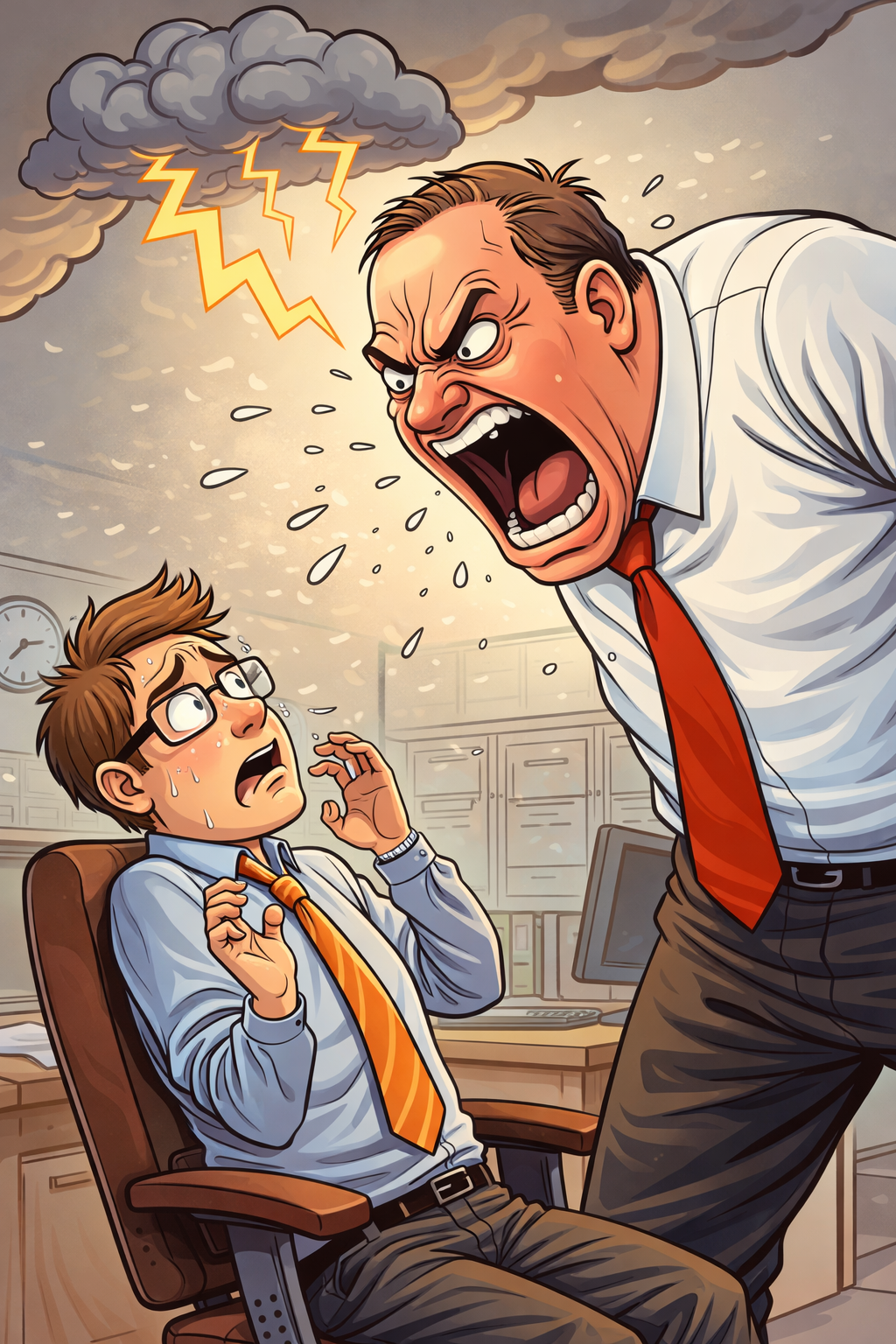
I’m tired of the unspoken expectation that the solution to abusive behavior at work is everyone else managing themselves better.
Too many of us work for — or alongside — people who are rude, dismissive, or volatile.
They raise their voices.
They talk over others.
They make rooms smaller.
And the message we receive is clear:
Bite your tongue.
Suck it up.
Work around it.
Don’t internalize it.
Be the bigger person.
And we will be.
However — that does not make the behavior acceptable.
Once, I was in a large meeting — 30 or 40 people — working through a member ID card design for an employer population. The employer had chosen a partner organization that had a legal right to space on that card.
When I explained the requirement and the proposed design, the VP responsible for ID card production slammed his hand on the table and yelled:
“It’s my goddamned ID card and they’re not getting any space on it!”
My instant messages immediately lit up.
“I can’t believe he’s screaming.”
“How are you staying so calm?”
“This is unbelievable.”
And here’s the truth leaders try to avoid:
You can write policy.
You can threaten consequences.
You can demand discretion.
People will talk.
They always do.
The question is, what you want them to say?
Do you want them whispering about fear?
About volatility?
About who to avoid in meetings?
Or do you want them talking about trust?
About safety?
About leaders who handle pressure without harming others?
Every time abusive behavior goes unaddressed, the room decides the story for you.
It’s never the story you think you’re telling.
I stayed calm because I was right.
I knew the facts.
I knew what had to be done.
But here’s what matters more:
What happened to that VP afterward?
Who spoke to him about appropriateness?
Who addressed the behavior?
Who drew the line?
Too often, the answer is no one.
And that silence sends a message:
This is tolerated.
This is survivable.
This is the cost of doing business.
Executives.
People leaders.
Those responsible for culture —
You cannot build healthy, productive, trusting organizations while ignoring this behavior.
Turning the other cheek is not leadership.
Avoidance is not maturity.
Silence is not neutrality.
When you allow abusive behavior to stand, you:
erode trust
shrink psychological safety
teach your best people to self-protect instead of contribute
and normalize fear as a management tool
That is not strength.
That is abdication.
HEAR leadership rejects this outright.
Humanity, Empathy, Alignment, and Resilience demand a hard line:
That’s not okay here.
Not sometimes.
Not depending on title.
Not depending on results.
If you’re unwilling to confront behavior that harms others — especially when it comes from senior leaders — then don’t seek this work.
Because HEAR is not about placating power.
It’s about protecting people, earning trust, and setting a standard that actually holds.
And yes — that requires courage.
Stop Expecting People to Placate the Abuser at Work